

Let’s address the $10,000 elephant in the room. If you’ve worked in senior housing, it’s likely that you’ve paid hefty referral fees to third-party services like A Place for Mom. These companies fill units for you, but at what cost? And more importantly, who owns that relationship?
It’s time to shift the balance of power and build a strategy where you’re not just renting attention, you’re earning loyalty. Because when you own the journey, you own the outcomes. And that’s the kind of growth that compounds — not just completes — a transaction.
The True Cost of Paid Referrals
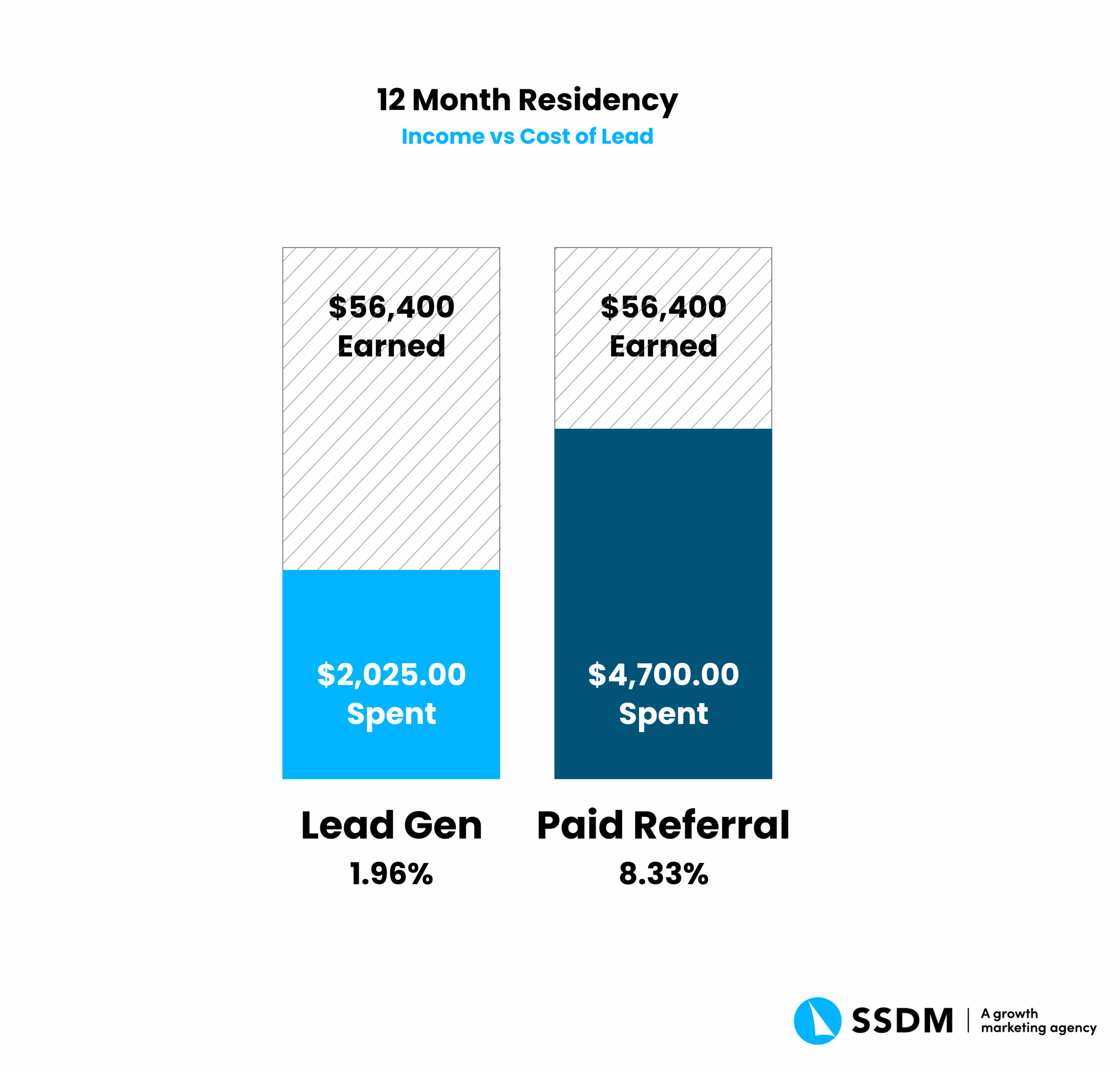
Let’s break down the numbers. You’re no doubt aware that with each move-in, you’re paying anywhere from $4,000 to $10,000. These numbers aren’t uncommon. But do you know what you’re really getting out of it?
Let’s say that you close 10 move-ins through paid referrals in one quarter. That’s potentially $100,000 spent just on move-ins. Now think about what it would look like if you reinvested half of that into a marketing strategy that brings in higher quality leads, strengthens your brand, and scales with you.
The lifetime customer value (LCV) of a senior living resident can exceed $60,000 or more, depending on the level of care and length of the residency. But with that being said, paid referrals tend to bring in leads with shorter tenure and lower engagement. They’re responding to a list, not choosing you.
In hindsight, paid referrals seem like an easy fix, but they actually create a hidden cost: dependency. That cost builds over time, which, in turn, dilutes your brand’s voice and turns your team into order-takers instead of relationship builders.
Why Not Try Something Different?
Instead of spending $10,000 every time someone moves in, what if you invested $5,000 a month to build your own lead pipeline? That $5,000 could fund a mix of inbound marketing, local partnerships, and brand storytelling.
This puts your company front and center in the market, so families won’t need to speak to a referral agent. Crafting meaningful content that answers real questions, nurturing leads through your CRM, and positioning your team as trusted advisors is what shifts you from a transactional brand to an intentional one.
The best part about this approach is that it compounds. Every dollar builds equity in your brand, strengthens local awareness, and prevents you from being another name on someone else’s list. You’re not just driving leads — you’re growing influence.
Real Alternatives to Referral Fees
When you stop relying on third-party referrals, you open the door to a strategy that’s more cost-effective, authentic, and sustainable. First, start with content marketing. When families are navigating senior care decisions things like educational blogs, videos, and guides can help reassure them in their decision-making process.
Focusing on search engine optimization (SEO) will boost your content when someone is searching for anything from memory care tips to assisted living near them. SEO helps your community come up in search queries right when it matters most.
Next, lean into digital lead generation. You can create a system that works around the clock to bring in qualified leads that align with your values. Targeted ads, email nurtures, and landing pages are just a few ways you can do this.
Community events, workshops, and grassroots outreach make your brand tangible.
Host caregiver support groups, partner with local hospitals, and set up fundraisers with businesses around your town. There is power in being present with your community.
Measuring Success and Having a Little Fun
Marketing should be measurable and motivational for your company. If you’re taking money away from paid referrals and putting it into marketing you need to see that it’s working. That’s where the Referral Fee Showdown comes in.
Have a little fun and set up a friendly competition inside your marketing department. Paid referrals vs. self generated leads. Create a scoreboard to track the ROI of each strategy, think cost-per-move-in, average length of stay, conversion rates, and Lifetime Customer Value.
Exercises like this are not just about the spreadsheets but about the clarity. You’ll be able to see which efforts bring in the kind of resident that will stay longer, engage deeper, and speak highly of your brand. It will also empower your team to get creative and take ownership of the wins.
Celebrate the victories, analyze what’s working, and refine what’s not. With this data you’ll be able to make confident, strategic budget decisions instead of reactive ones. You might even find that your internal marketing outperforms paid referrals in every way that matters. And that’s a showdown worth watching.
With all that said, you don’t have to go cold turkey on paid referrals tomorrow, but instead come up with a plan. Start to shift your budget little by little to align your team and build assets that will compound over time. This will bring the data, the creativity, and the results that show you real growth.